Pastel vs Oil Pastel: What's the Difference?
 PastelsOil Pastels
 Drawing
 PaintingArt Mediums
 You're looking at art class descriptions and see both "pastel" and "oil pastel" offered. They sound similar, and both come in stick form. But they're fundamentally different mediums with different techniques, different results, and different learning curves.
Here's what actually distinguishes them.
The Basic Difference
Soft pastels (often just called "pastels") are made from pigment bound with a minimal amount of gum or resin. They're dry, powdery, and dusty.
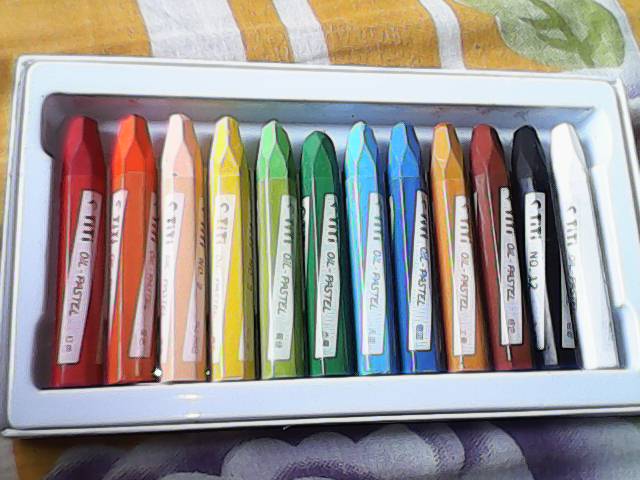
Oil pastels are made from pigment bound with oil and wax. They're creamy, waxy, and never fully dry.
This single difference in binder creates completely different working properties.
Composition
Soft Pastels
- Pigment + minimal gum/resin binder
- Dry, chalky texture
- Crumble if pressed hard
- Produce dust when used
- Come in various hardness levels (soft, medium, hard)
Oil Pastels
- Pigment + oil + wax binder
- Creamy, waxy texture
- Don't crumble
- No dust
- Consistent texture across brands (though softness varies)
The higher the pigment-to-binder ratio, the more intense the color. Artist-grade versions of both have more pigment than student grades.
How They Feel to Use
Working with Soft Pastels
Soft pastels glide across paper, leaving powdery pigment on the surface. They feel like drawing with pure color. The texture ranges from firm (hard pastels) to incredibly soft (extra-soft pastels that feel like touching a cloud).
Blending: Happens easily with fingers, paper stumps, or brushes. The powder moves and mixes on the paper surface.
Layering: Colors sit on top of each other. You can layer many colors, though the surface eventually becomes saturated with pigment (called "tooth" being filled).
Erasing: Possible to some degree—you can lift pigment with kneaded erasers or brush it away. Not as clean as pencil erasing.
Working with Oil Pastels
Oil pastels feel like drawing with lipstick or crayons. They're smooth and creamy, leaving a thick, waxy mark. Some brands are firmer (Crayola-style), while artist-grade versions can be almost buttery.
Blending: Requires more effort. You can blend with fingers, but the wax resists mixing. Solvents (mineral spirits, baby oil) help create smoother blends.
Layering: Colors mix on the surface like paint. Heavy layering creates thick, impasto-like texture.
Erasing: Very difficult. Oil pastels commit to the surface. You can scrape them off with a knife, but you can't truly erase.
Visual Results
Soft Pastel Look
- Matte, velvety finish
- Soft edges and gradients
- Atmospheric, ethereal quality
- Colors can appear slightly dusty/powdery
- Traditional "pastel" aesthetic (think Degas dancers)
Oil Pastel Look
- Glossy or semi-glossy finish
- Visible texture and stroke marks
- Bold, saturated colors
- Can look more like painting than drawing
- Modern, graphic quality
Surface Requirements
Soft Pastels Need Texture
Soft pastel pigment sits on top of paper fibers. Smooth paper won't hold the powder—it just slides off. You need:
- Pastel paper (like Canson Mi-Teintes)—textured, comes in colors
- Sanded paper (like Uart or Pastelmat)—grabs more pigment, allows more layers
- Pastel board—rigid support with textured surface
Paper color matters with soft pastels. The paper shows through and becomes part of the artwork. Many soft pastel artists work on toned (colored) paper.
Oil Pastels Are More Flexible
Oil pastels adhere to more surfaces since they physically stick via wax:
- Paper (including smooth paper)
- Canvas
- Wood
- Cardboard
- Even glass (temporarily)
While textured surfaces still work better, oil pastels don't require specialized paper the way soft pastels do. That said, heavyweight paper prevents buckling and warping.
Preservation and Display
Soft Pastels Need Fixative
Unfixed soft pastel artwork smudges at a touch. The powder sits loosely on the surface forever. Options:
- Workable fixative: Light spray that allows more work on top. Darkens colors slightly.
- Final fixative: Heavier spray for finished work. More color shift.
- Framing under glass: Traditional method. Spacers keep glass from touching the artwork. No fixative needed if glass protects it.
Many pastel artists avoid fixative entirely because it dulls colors, instead relying on careful framing.
Oil Pastels Never Fully Dry
Oil pastels remain slightly soft indefinitely. This creates different preservation challenges:
- Can smudge if touched (even years later)
- Can transfer to glass if framed
- May need spacers in frames
- Some artists apply cold wax medium or varnish (but this changes the surface)
Neither medium is "framable without consideration"—both need proper handling.
Health and Safety
Soft Pastel Concerns
The main concern is dust. Inhaling pastel dust isn't good for your lungs, especially with pigments containing heavy metals (cadmium, cobalt, etc.).
Precautions:
- Work in ventilated areas
- Consider a dust mask for extended sessions
- Avoid blowing on your work (sends dust airborne)
- Clean surfaces with damp methods, not dry dusting
- Wash hands after working
Oil Pastel Concerns
Minimal respiratory concern since no dust is produced. Main considerations:
- Some pigments are toxic if ingested (keep away from children, wash hands)
- Solvents used for blending require ventilation
- Some people develop skin sensitivity with prolonged contact
Generally, oil pastels are considered safer for casual use than soft pastels.
Learning Curve
Soft Pastels
Easier aspects:
- Blending is intuitive
- Corrections are somewhat possible
- Drawing techniques transfer well
Challenging aspects:
- Managing dust
- Preventing smudging
- Learning fixative use
- Understanding paper color relationships
Most people with drawing experience adapt to soft pastels quickly. The challenge is in finishing and preserving work.
Oil Pastels
Easier aspects:
- No dust to manage
- Surface is more permanent
- Forgiving of rough handling
- Immediate results
Challenging aspects:
- Blending requires technique
- Mistakes are hard to fix
- Different from both drawing and painting
- Achieving subtle effects takes practice
Oil pastels have their own logic that doesn't quite match other mediums. Some people take to it immediately; others struggle with the waxy resistance.
Cost Comparison
Entry-Level Sets
| Type | Budget Set | Mid-Range Set |
|---|---|---|
| Soft Pastels | ~$15-25 (24 pieces) | ~$40-60 (36 pieces) |
| Oil Pastels | ~$10-15 (24 pieces) | ~$30-45 (36 pieces) |
Paper Costs
Soft pastels require specialty paper, adding $10-25 for a decent pad. Oil pastels work on standard mixed media paper ($8-15).
Overall
Oil pastels have a lower startup cost, primarily because paper requirements are less specific.
Which Classes to Take?
Take a Soft Pastel Class If:
- You enjoy drawing and want to add color
- You like soft, atmospheric effects
- You're interested in portraits or landscapes
- You don't mind managing dust and fixative
- You're drawn to impressionist or classical looks
Take an Oil Pastel Class If:
- You want bold, graphic results
- You like thick, textured application
- You prefer less fussy materials
- You're interested in mixed media work
- You want something between drawing and painting
Can't Decide?
Many studios offer "pastels" classes that touch on both. Or take one of each—they're different enough that enjoying one doesn't predict your response to the other.
Can You Use Them Together?
Yes, with caveats. Some mixed media artists layer soft pastels over oil pastels (soft sticks to the waxy surface poorly) or use oil pastels for underpainting with soft pastels on top. The wax in oil pastels acts as a resist.
But for beginners, focus on one medium at a time. Learn its properties before combining.
Quick Comparison Table
| Aspect | Soft Pastels | Oil Pastels |
|---|---|---|
| Texture | Dry, powdery | Creamy, waxy |
| Blending | Easy, with fingers | Requires work, or solvents |
| Dust | Yes | No |
| Dries | Never (stays powder) | Never (stays waxy) |
| Erasing | Somewhat possible | Very difficult |
| Paper needed | Textured/sanded | Any heavyweight paper |
| Fixative needed | Usually yes | Usually no |
| Finish | Matte, velvety | Glossy to semi-matte |
| Health concerns | Dust inhalation | Minimal |
| Cost to start | Higher (specialty paper) | Lower |
The Bottom Line
Soft pastels and oil pastels are more different than similar. The names are confusing, but the experience of using them is distinct.
Soft pastels reward a drawing-oriented approach, produce atmospheric effects, and require managing dust and preservation.
Oil pastels offer a more painting-like experience, deliver bold colors, and trade mess for permanence concerns.
Neither is better. They're different tools for different purposes. Try both if you can—the one you prefer might surprise you.